Location

Newcastle upon Tyne, England

Static Monitoring of the Carliol House Façade

project start

September 20, 2022

Sensors

Gateway
Collects sensor data via LoRaWAN and transmits it to the cloud via cellular.
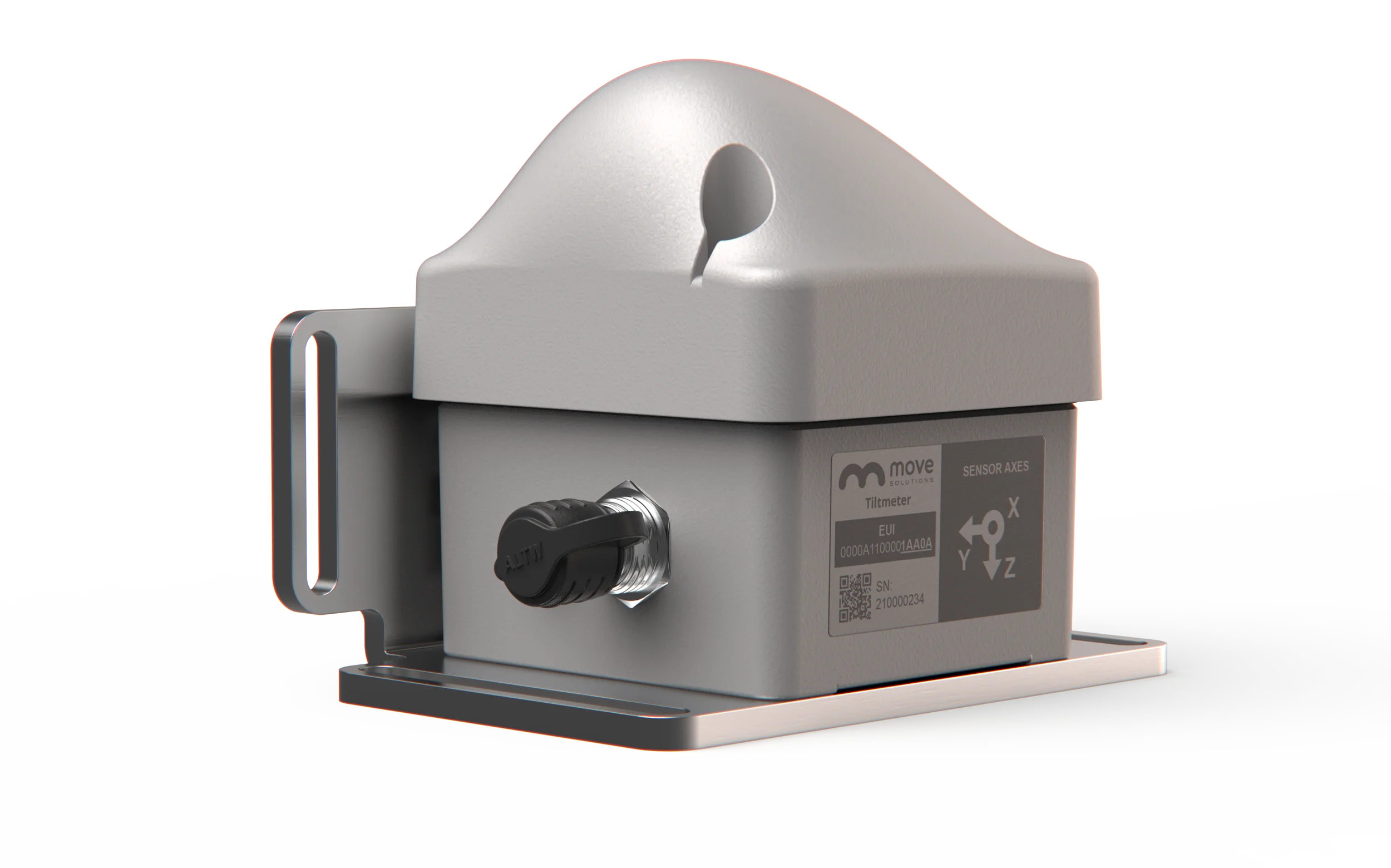
Tiltmeter
Detects angular variations with sub-milliradian resolution.

Static Monitoring of the Carliol House Façade
Overview

Academy Geomatics Ltd used Move Solutions sensors to monitor the Carliol House while the rear of the building was getting knocked down and a new building was getting built into the facade.

Last summer, building work officially started on a new £155m HMRC headquarters in Newcastle. The Pilgrim’s Quarter project, part of the new £155m HMRC headquarters in Newcastle, is the biggest office development in Newcastle City Centre’s history. The facade of the Carliol House is a listed structure, but the floor space and all structure beyond the front facade are not. Hence, as part of the Pilgrim Quarter development within Newcastle upon Tyne, the rear of the building was demolished in order to make room for a new building to be built into the facade.

Monitoring system

Since the Pilgrim Quarter project is located very close to the underground Metro tunnels in the area, Academy geomatics Ltd installed monitoring system, using Move Solutions sensors, for both the Metro running tunnel and the ventilation tunnel running alongside. Following the successful installation of this scheme, Bowmer and Kirkland contracted Academy Geomatics Ltd to undertake façade monitoring with Move Solutions Tiltmeters. 1m Tilt Beams were used at the top and near the bottom of the facade to measure any possible deformation.  

No items found.

Other case studies

Bridges

Bridge of the Gods: wireless structural health monitoring for a historic Columbia River crossing

Discover how Move Solutions and Parsons deployed a wireless structural health monitoring system on the Bridge of the Gods in Oregon, capturing real-time data on stress, vibration, and movement to protect and extend the life of this historic Columbia River crossing, an early but crucial step toward ensuring its safety, resilience, and preservation for decades to come.

Cascade Locks, Oregon (US)

Read case study
Bridges

Transforming bridge safety with real-time structural health monitoring in West Virginia

Wireless sensors and a real-time monitoring platform provide continuous insight into the bridge’s dynamic behavior, helping engineers assess structural performance, reduce special inspections, and support more efficient maintenance decisions.

Huntington, USA

Read case study
Bridges

Wireless Monitoring of the Zambeccari Bridge in Tuscany

The Zambeccari bridge in Pontremoli was built in the early 1900s on the Verde stream. It is a reinforced concrete bridge developed on two spans of the same length. In May 2020, the closure to both vehicular and pedestrian traffic is ordered for structural checks. The objective of the temporary closure of the structure is to clarify the state of health of the bridge and its structural degradation. After verifying the state of the Zambeccari bridge by the Vega Engineering Company, the structure was reopened with a reduced carriageway. Vega has prepared, with the approval of the municipality, the insertion of a continuous and remote structural monitoring system.

Pontremoli, Tuscany, Italy

Read case study
Bridges

Dynamic Monitoring of the Vespucci Bridge in Florence

The Vespucci bridge is one of the central bridges of Florence that allows you to join the San Frediano district to the rest of the city, separated by the Arno river. It is a structure in c.a.p. arch divided into 3 spans, with an overall length of 162m. Designed by Riccardo Morandi and built between 1954-1957, suffers from deterioration of the concrete, like many works of the time. This deterioration has affected the two piers even more markedly, especially the one on the left (San Frediano side) due to the erosion of the riverbed by the currents of the Arno river. This structural deterioration required continuous monitoring and safety works.

Florence, Italy

Read case study