What Is DIN 4150 and Why Is It the Global Standard?

Join the Move Solutions newsletter
Stay updated on product releases, news, and upcoming webinars.
If you have ever monitored a building next to piling, blasting, or a tunnel bore, you have measured against DIN 4150. It is not a long document, and most of its relevant content is contained in three short tables. The logic behind those tables is very useful, and that's why it has become one of the international standards in infrastructure monitoring.
What is DIN 4150
Part 1, prediction
DIN 4150-1 deals with forecasting vibration parameters before the source is created. It's for the planning stage of a project, when you are estimating what a future pile driver or rail line will do to the surroundings. This part sees far less use than Part 3, because most monitoring happens once the work is already underway.
Part 2, effects on people
DIN 4150-2 is about the perception humans have of the source of vibration. It evaluates whether occupants will be disturbed by vibration in the 1 to 80 Hz range and sets comfort thresholds that depend on the use of the building and the time of day, so for example a hospital ward at night is held to a stricter standard than a workshop in daytime. People notice even low levels of vibration, which is why Part 2 limits are an order of magnitude under Part 3.
Part 3, effects on structures
DIN 4150-3 is the part used in structural health monitoring. It governs the risk of vibration damage to the building itself, the cracking and the loss of serviceability and the cosmetic plaster failure. Engineers can assess risk through peak particle velocity and dominant frequency, which are parameters measured by vibrometers.
How DIN 4150-3 works
DIN 4150-3 talks about three parameters that need to be monitored. The first is PPV, the highest instantaneous velocity of the ground or structure, in mm/s. The second is the dominant frequency of that vibration. The third is the category of the building that is being protected.
Frequency is important, because low-frequency energy couples efficiently into the resonant modes of a whole building, which is usually between 1 and 10 Hz, so the same 8 mm/s is far more threatening at 6 Hz than at 60 Hz. DIN 4150-3 recognises this and so the allowable PPV increases with the frequency.
The guideline values
For short-term vibration measured at the foundation, DIN 4150-3 gives frequency-dependent guideline values across three bands, 1 to 10 Hz, 10 to 50 Hz, and 50 to 100 Hz. Commercial and industrial structures are allowed 20 mm/s at the bottom band, rising to 40 to 50 mm/s at the top. Residential buildings from 5 to 20 mm/s. Sensitive and heritage structures, the ones with no steel frame and a lot to lose, from 3 to 10 mm/s. There is a separate row for the uppermost floor measured horizontally, frequency-independent, at 40, 15, and 8 mm/s for those same three categories, because floors amplify the signal that reaches them.
Long-term vibration, from steady traffic or a permanent plant, is held to lower values again, since fatigue increases the damage when compared to single-time events.
Why a German standard is used everywhere
DIN 4150-3 spread for an unglamorous reason. Its thresholds are deliberately conservative, set close to the onset of cosmetic cracking rather than at the point of real structural harm, with a wide safety margin built in below anything that would threaten stability. That conservatism is exactly what a project needs to be defensible from a building owner, an insurer, or a court. If you stay under the DIN line and a crack appears anyway, the standard is on your side.
The second reason is the frequency-dependent logic. It reflects how structures respond instead of imposing a single blunt limit, so engineers trust it across building types and source types, from blasting to vibratory rollers to TBMs.
The third reason is that other countries quietly adopted it. Italy's UNI 9916 describes how to measure and evaluate vibration on buildings but largely points back to DIN 4150-3 for the actual guideline values. Australia, the Gulf, and much of Asia specify DIN 4150 on international jobs because it is rigorous and everyone already knows it.
How Move Solutions applies DIN 4150-3
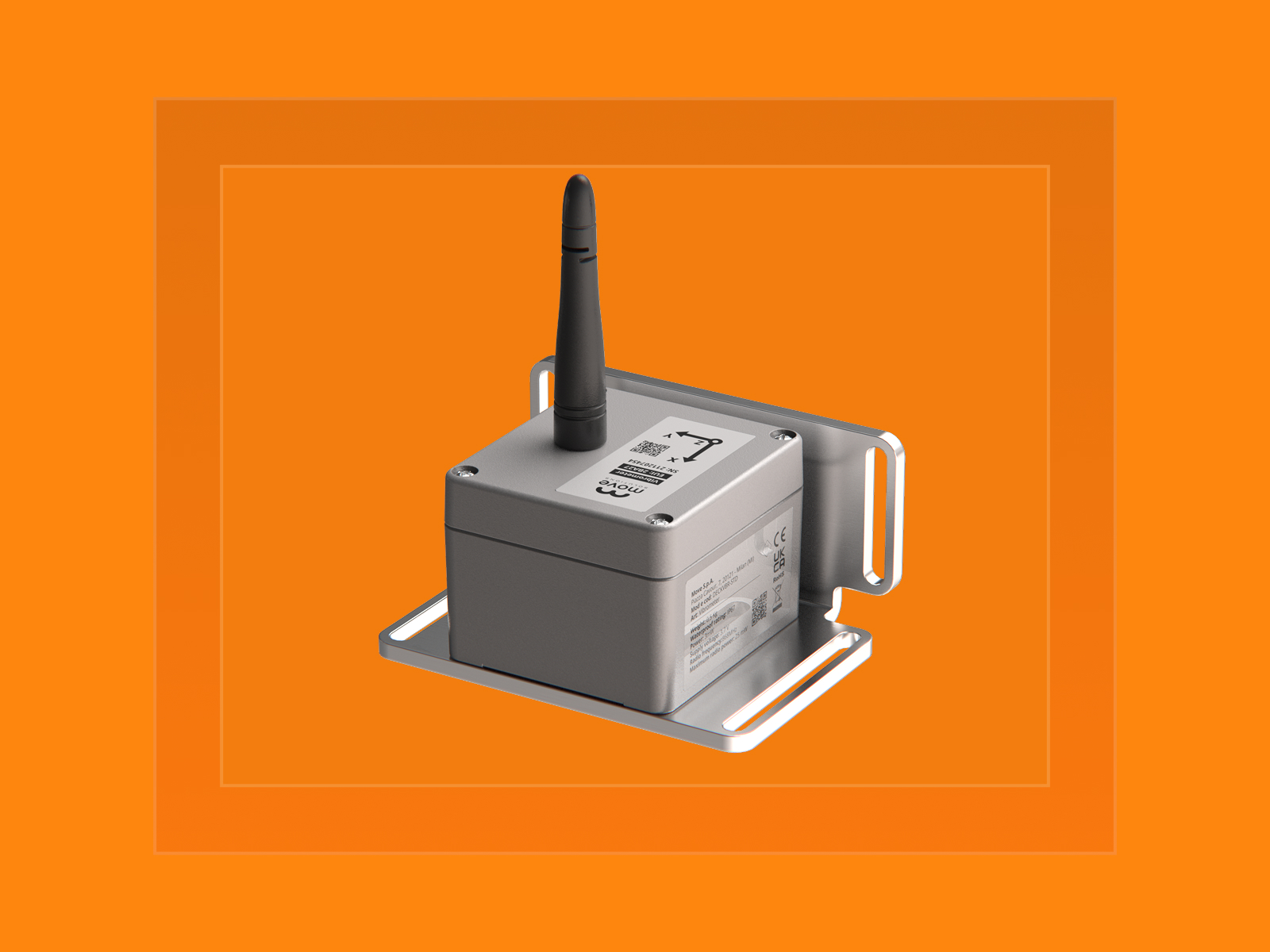
Our DECKVBR-STD vibrometer measures PPV across a 1 to 100 Hz bandwidth, which maps onto the full assessment range of DIN 4150-3, so a single wireless unit reports the velocity and the dominant frequency the standard asks for. The sensor is also built to UNI 9916, BS 7385, and the US Bureau of Mines RI8507, so one device covers most of the regimes a multinational contractor runs into.
In MyMove, our data platform, alarm thresholds can be custom or they can directly reflect the threshold levels from DIN 4150-3 or other standards.
Frequently Asked Questions
If our readings stay under the DIN 4150-3 limit, can the owner still claim we caused a crack?They can claim it, but the standard makes the claim hard to sustain. DIN 4150-3 thresholds sit near the onset of cosmetic cracking with a deliberate margin, so a documented record below the line is strong evidence the vibration was not the cause. The value of continuous monitoring is having that record at all, time-stamped and per-axis, rather than a handful of spot checks.
DIN 4150-3 or UNI 9916 on an Italian site?Both, effectively. UNI 9916 is the Italian reference for how to measure and evaluate, and it leans on DIN 4150-3 for the guideline values themselves. A sensor compliant with both, like DECKVBR-STD, settles the question, and you cite UNI 9916 as the national framework while reporting against the DIN tables.
How many vibrometers does one building actually need?For most DIN 4150-3 jobs, two. One at the foundation nearest the source for the frequency-dependent assessment, and one at the uppermost floor for the horizontal amplification check. Adding more rarely changes the verdict and usually just raises the cost and the data you have to defend.
Why measure dominant frequency at all, instead of just PPV?Because the limit is not a single number. The allowable PPV at 5 Hz can be a quarter of the allowable PPV at 60 Hz for the same building, so a velocity reading without its frequency cannot be scored against the table. A device that reports only PPV forces you to guess the frequency, which is how sites end up either over-conservative and slow or quietly out of compliance.
Other articles

Subscribe to Updates
Stay informed about our latest innovations and insights.