Rail Vibration Monitoring: Protecting Tracks and Lineside Structures
Join the Move Solutions newsletter
Stay updated on product releases, news, and upcoming webinars.
A railway is a vibration source that never stops, and the energy it releases goes in two directions. Inward, into the assets that carry the track, and outward, into the ground and the buildings that sit beside the line. A vibrometer quantifies both directions of this energy by looking at the velocity at which a point on a structure is moving.
Two problems of railway vibrations
Railways have two problems caused by vibration, the first one is fatigue, when the energy is directed inwards. Structures like railway underbridges or retaining walls receive the load of axles that pass over them. The excitation is relentless and narrow-band, dominated by the wheel/rail contact and sharpened by singular defects like wheel flats, rail joints, welds and turnouts.
The second problem, when energy is directed outward, concerns the surroundings of the railway. When ground-borne vibration radiates from the track into nearby buildings, it disturbs people and, at higher amplitudes near the line, threatens fabric on older structures. Although the typical levels are modest, high-speed services can cause PPV to go above 0.8 mm/s close to the rail.
What does a vibrometer measure on a railway
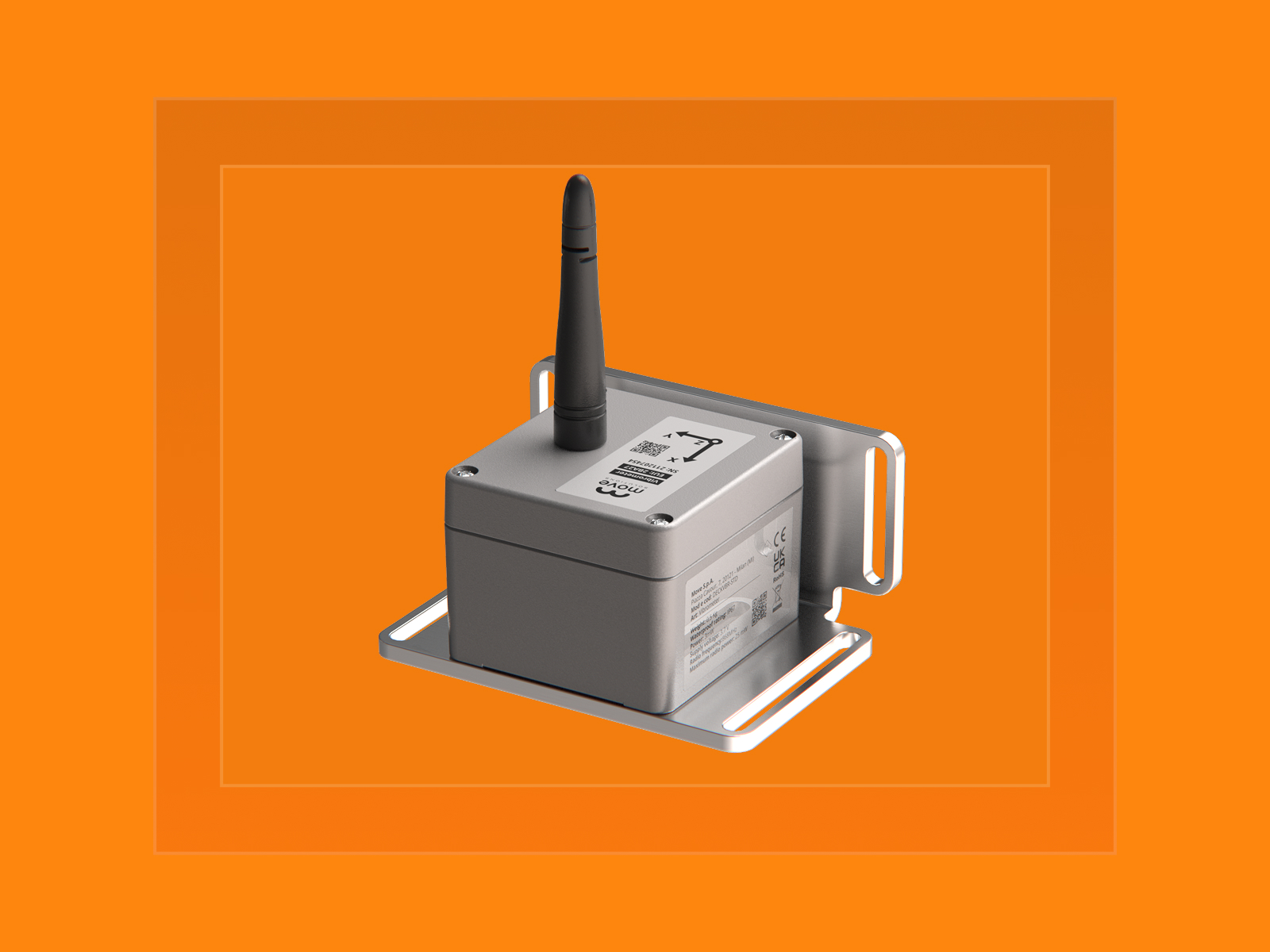
So what is PPV? It's the peak instantaneous velocity of a point during an event, reported per axis in mm/s. It is the quantity the damage-assessment standards refer to, which is why a vibrometer is better than an accelerometer for compliance (rather than dynamics). For example, Move Solutions' DECKVBR-STD resolves 0.003 mm/s with a range to ±100 mm/s across a 1 to 100 Hz band, which includes the part of the rail-vibration spectrum that matters for structural damage and human response.
The range ±100 mm/s is important, since it covers the structurally relevant energy without making the sensor too sensitive or too general. For example, ground-borne vibration from trains carries most of its structurally relevant energy below about 80 Hz, with the higher, audible content that turns into structure-borne noise tailing off above it. Higher frequencies than this aren't relevant to damage standards, so they are not covered by this range.
The standards for railways
ISO 14837-1 is the rail-specific reference, giving general guidance on ground-borne noise and vibration from rail systems, the factors, parameters and prediction methods to weigh, with companion parts covering the field-measurement procedure.
For damage assessment on the buildings beside the line, the limits come from DIN 4150-3 and, in Italy, UNI 9916. DIN 4150-3 is the one most projects default to because it sets different velocity limits for industrial, residential and sensitive or historic structures, and of weighting them by frequency. In practice that means a single PPV alarm threshold is rarely the right configuration on a line. Alarms should be set per structure class and against the dominant frequency the train traffic produces at the location.
Deploying rail monitoring
Accessing railway is one of the most critical points of a deployment, since you cannot trench cable along a live railway. The stop windows when you are allowed to come close to the tracks are short, expensive and usually at night. This is why installing wireless sensors which require very little work are preferable for tracks. A wireless vibrometer can be installed inside a single possession, bolted to the structure, and then run for years on its own battery while streaming to a data platform.
Where the sensor goes depends on the inward or outward problem that needs to be measured. For the inward fatigue case, the vibrometer goes on the asset under load, which means, for example, the mid-span soffit of an underbridge. For the outward impact case, it goes on the foundation or ground floor of the nearest affected building, often a property the railway does not own, which adds an access negotiation.
Frequently Asked Questions
For a railway underbridge, do I want a vibrometer or an accelerometer?
Both, for different questions. The vibrometer reports the PPV the traffic imposes, which is what a compliance or damage-limit case needs. The accelerometer running modal analysis tells you whether the deck is losing stiffness over the years, which is the structural-health case. On a busy underbridge that carries real consequence if it fails, we would deploy a DECKVBR-STD for the imposed-load picture and a DECKAXE-SHM for the modal trend, not one standing in for the other.
Where does the vibrometer actually go, on the structure or at the neighbour's wall?
It depends which problem you are solving. To protect the rail asset, the node mounts on the asset under load, so the underbridge soffit, the culvert, the wall stem or the mast foundation. To defend against a complaint or a damage claim from a lineside building, it mounts on that building's foundation, which usually means negotiating access to the property.
Does one PPV threshold work for a line that runs both freight and passenger trains?
Freight and high-speed passenger services produce different amplitudes and different dominant frequencies, and DIN 4150-3 already expects you to read PPV against frequency and against the class of the receiving structure. A flat threshold either produces alarms for nuisance on the heaviest freight or has too high of a range to catch events. Alarms need to be set per structure and per traffic.
Other articles

Subscribe to Updates
Stay informed about our latest innovations and insights.