The BQE Will Be Fixed by 2040. Is It Safe to Use Until Then?
Join the Move Solutions newsletter
Stay updated on product releases, news, and upcoming webinars.
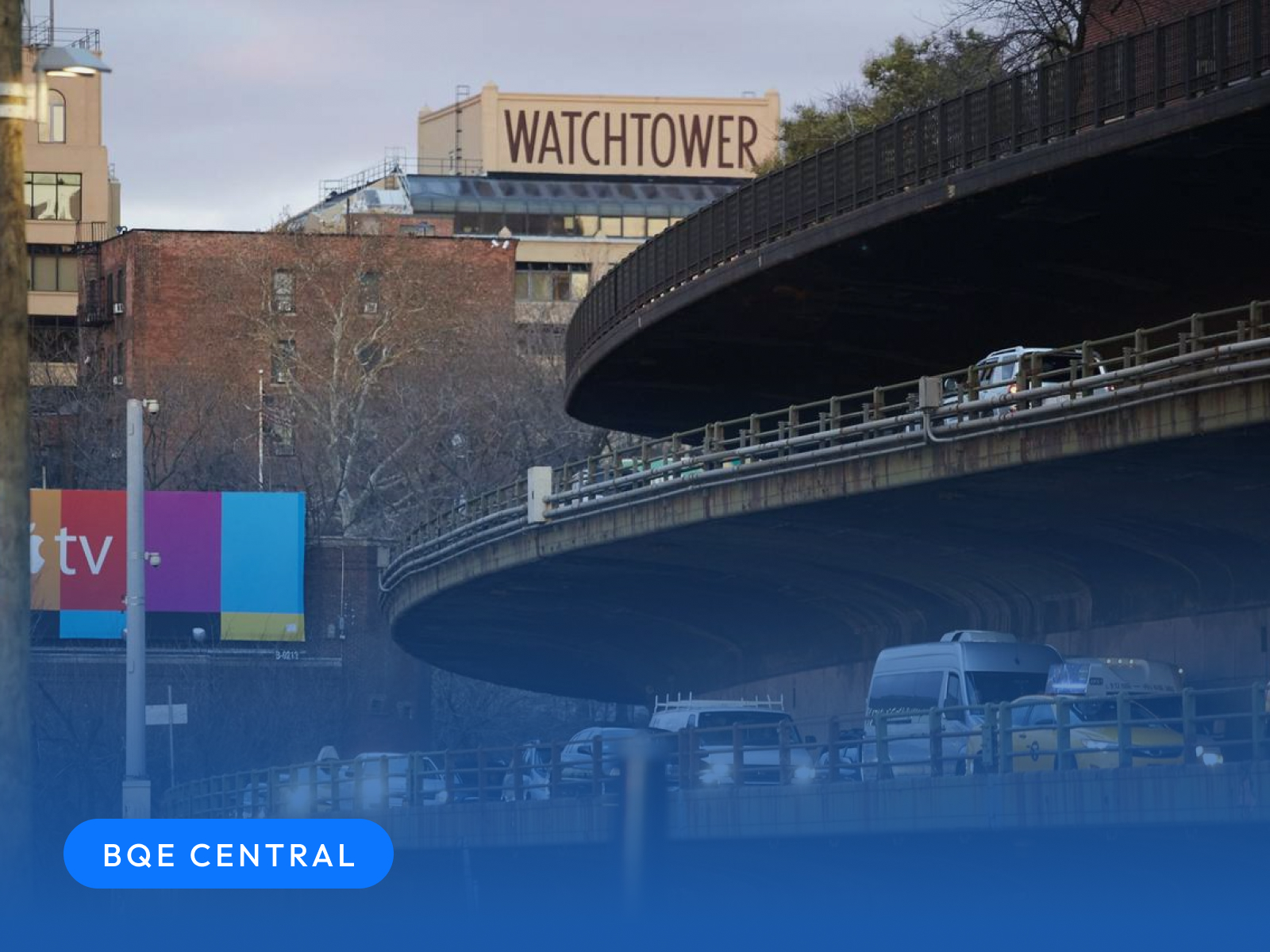
On August 24, Mayor Zohran Mamdani and NYC DOT Commissioner Mike Flynn announced a $4 billion, 10-year rehabilitation of BQE Central — the 1.5-mile, city-owned stretch between Atlantic Avenue and Sands Street that includes the famous triple cantilever beneath the Brooklyn Heights Promenade.
Two temporary bypasses will keep traffic moving while crews rebuild the structure. When the work is done, the highway's design life will be extended by another 40 years, through roughly 2080.
This decision comes after decades of proposals, panels, and political paralysis. The clock has been ticking for a long time: BQE Central has been in operation since 1954, it was designed to stay in service for 50 years and to carry a little over a third of its current traffic. It is one of New York's biggest infrastructure overstayers.
The environmental review will begin this fall of 2026. The Environmental Impact Statement is expected in the summer of 2028, while construction will break ground in 2030 and take a decade, wrapping up around 2040.
Now that the plan is in place, what happens to the highway between now and 2040? Is it safe to be used by 130,000 vehicles daily?
Four more years of full load on a structure 20 years past its design life
BQE Central was designed in 1954 to carry roughly 50,000 vehicles a day, for 50 years. Today it carries more than 130,000 vehicles daily, including 13,000 heavy trucks — and it is two decades beyond the life it was engineered for. The city itself estimates that every year of delay costs about $160 million.
Even with the new announcement, the highway will keep carrying 80,000 more vehicles per day than it was designed for, on a structure that is already deteriorating, until at least the early 2030s. That is when the temporary bypasses open and the cantilever can finally be taken out of service for reconstruction.
Is it possible to keep using it until then? So far, the answer has been yes. Here's why.
What the assessments have actually said
The condition of BQE Central is not a mystery, because, thankfully, it is one of the most examined structures in New York.
In 2016, NYC DOT launched a detailed examination of the 21 bridge structures that make up this section. The resulting inspection rated the cantilever in "poor" to "fair" condition. Unfortunately, decades of water and de-icing salt infiltration had corroded the rebar and weakened the steel inside the roadways.
The warnings that followed were unusually specific. A report commissioned under the de Blasio administration projected that, without intervention, trucks would have to be diverted off the cantilever by 2026 — and the structure fully closed by 2036. The city's 2019 expert panel added a critical detail: about 11% of the trucks crossing the cantilever every day exceeded the 80,000-pound legal weight limit, with some weighing more than double that — on a structure never designed for such loads.
2026 is now here. Trucks have not been diverted. So what changed?
Why the city can say "the structure is safe right now"
Announcing the rehabilitation plan, Commissioner Flynn was direct: the structure is safe right now, but the time to gear up for major work has essentially run out. This is based on a management regime that turned BQE Central into one of the most intensively monitored pieces of infrastructure in the country.
Since 2021, the city has executed a rolling program of repairs designed specifically to buy time for the structure. It included replacing deteriorated joints, patching concrete, addressing corroded steel.
In 2023, NYC DOT activated the nation's first automated weigh-in-motion enforcement system on the cantilever. In-road sensors weigh every passing truck; cameras identify violators of the 40-ton limit, who receive a $650 fine. The result is that overweight trucks dropped by more than 60%, from nearly 8,000 per month to about 3,000.
Beyond quarterly visual inspections by DOT engineers, sensors and specialized instruments track the cantilever's global stiffness, concrete cracking, and vibration behavior continuously. DOT and its engineering partners use this data stream not only to assess current condition, but to model how the structure will behave in the years ahead.
The city credits the combination of repairs, overweight-truck enforcement, and high-tech structural monitoring with extending the cantilever's lifespan, which made it possible to push back the 2026 truck-diversion deadline and make a 2030 construction start viable.
The lesson of the BQE
The BQE is safe to use until construction begins because somebody is watching it. This includes continuous monitoring with instruments against engineering models. It is the data that allowed for the safety of the highway to be assured during the political and proposal deadlock.
The BQE's management regime should become the norm for structures past their design life, not the exception. Across New York City, nearly 12% of tracked bridges are rated in poor condition, and the overwhelming majority are managed through a visual inspection every one to two years, with no continuous structural data in between. Same problem as the BQE, none of its instrumentation.
Other articles



Subscribe to Updates
Stay informed about our latest innovations and insights.